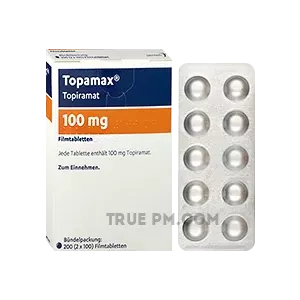
Topamax (generic name: topiramate) is a widely used anticonvulsant that also serves as a preventive treatment for migraines. In epilepsy, it reduces the likelihood and intensity of seizures by stabilizing overactive neural circuits. For migraine prevention, it lowers the brain’s susceptibility to triggers that initiate cascades leading to headache, aura, and associated symptoms like light sensitivity and nausea. Many patients notice fewer events after several weeks of consistent use, though the full preventive benefit for migraines may take 8 to 12 weeks.
Topiramate is a “broad-spectrum” antiepileptic. It can be used alone (monotherapy) or in combination with other seizure medicines for partial-onset seizures, primary generalized tonic–clonic seizures, and seizures associated with Lennox–Gastaut syndrome. For migraines, it is taken on a daily schedule to reduce attack frequency rather than to relieve pain once a headache starts.
How it works is multifaceted. Topiramate modulates several neurochemical pathways:
This combination reduces abnormal electrical activity in epilepsy and dampens migraine networks that amplify pain signaling. While Topamax does not cure epilepsy or migraines, it often delivers meaningful improvements in quality of life, enabling better work, school, and daily functioning. Realistic expectations are important: some people experience substantial relief, others modest benefit, and a subset may not respond or may have limiting side effects. Dose adjustments and careful titration increase the chance of a successful outcome.
Beyond its primary uses, topiramate is sometimes used off-label for conditions such as binge eating disorder, essential tremor, weight management (including in combination with phentermine), and certain mood symptoms in bipolar disorder. Off-label decisions should be individualized and monitored by a clinician.
Topamax is available as tablets and sprinkle capsules. Tablets are swallowed whole. Sprinkle capsules can be opened and the contents gently sprinkled onto a small spoonful of soft food (such as applesauce) and swallowed immediately without chewing; do not store the mixture for later. Consistency is crucial: take Topamax at the same times each day to maintain steady blood levels.
Common adult dosing patterns include:
Children may require weight-based dosing and slower titration; pediatric dosing must be guided by a clinician experienced in pediatric neurology. Older adults and those with kidney impairment generally need lower starting doses and slower increases.
Helpful administration tips:
Never change your dose or stop Topamax abruptly without medical guidance. Sudden discontinuation, especially in people with epilepsy, can trigger breakthrough seizures. If side effects make it hard to continue, call your prescriber to adjust the plan safely.
Before you begin therapy, a frank discussion with your clinician helps tailor treatment to your health status and goals. Points to cover include:
Baseline and periodic monitoring may be recommended, especially if you have risk factors:
What to expect during titration: common early effects include tingling in the fingers or toes (paresthesias), taste changes, and cognitive slowing (sometimes nicknamed “Dopamax”). These often improve with slower dose increases, adequate hydration, and time. Report any concerning symptoms—there may be a dosing strategy that balances benefits and tolerability.
Topamax may not be appropriate for everyone. Avoid or use extreme caution if you have:
Special populations:
Not everyone experiences side effects, and many are mild and transient. Still, being aware helps you respond promptly. Common effects include:
Less common but important effects:
Rare events include severe rash, metabolic bone changes with long-term acidosis, and very rarely pancreatitis or liver enzyme elevations. If something feels off or suddenly worsens, trust your instincts and contact your healthcare professional.
Drug interactions can alter effectiveness or increase side effects. Always provide a complete, updated medication list to every healthcare provider.
Dietary considerations: very low-carbohydrate or ketogenic diets raise acidosis and kidney stone risk with topiramate; if such a diet is prescribed for epilepsy, monitoring and prevention strategies are essential.
Missed doses happen. The safest approach is simple:
If you miss multiple doses, especially if you take Topamax for seizure prevention, contact your prescriber. Abrupt swings in medication levels can increase seizure risk. If you take an extended-release topiramate product, follow its package-specific guidance for missed doses.
Overdose can be dangerous. Symptoms may include severe drowsiness, agitation, speech difficulties, blurred or double vision, rapid breathing, confusion, coordination problems, and seizures. If overdose is suspected:
Hospital care typically includes monitoring vital signs, fluids, correction of acid–base abnormalities, and supportive treatment. Because topiramate has low protein binding and is renally cleared, hemodialysis can help remove the drug in severe cases, particularly when kidney function is impaired.
Store Topamax at controlled room temperature, ideally between 15°C and 30°C (59°F to 86°F), away from excessive heat, humidity, and direct sunlight. Keep bottles tightly closed and out of reach of children and pets. Do not store medicines in the bathroom where humidity fluctuates.
Consistent daily routines—pill organizers, phone reminders, pairing doses with regular activities—can reduce missed doses and improve outcomes.
For additional, trustworthy information on epilepsy and migraine therapies, visit the Epilepsy Foundation.
In the United States, Topamax (topiramate) is a prescription-only medication. By federal and state law, pharmacies dispense it when a licensed prescriber has authorized a valid prescription, typically after evaluating the diagnosis, risks, benefits, and potential interactions. This safeguard protects patients by ensuring the medication is appropriate, dosed correctly, and monitored over time.
Access pathways include traditional in-person care, telehealth visits, and collaborative care models where neurologists, primary care clinicians, and pharmacists coordinate therapy. Generic topiramate is widely available and usually less expensive than brand-name Topamax. Insurance formularies, copay assistance, and manufacturer or charitable patient-support programs may further lower out-of-pocket costs. Regardless of the source, use only licensed U.S. pharmacies and avoid unverified vendors that bypass safety checks.
Contraception considerations are essential for patients who may become pregnant: topiramate can lower the effectiveness of estrogen-containing contraceptives at higher doses, and prenatal exposure may increase birth-defect risk. Discuss reliable contraception and family planning with your clinician before starting therapy. If pregnancy occurs, do not stop abruptly—seek medical advice promptly to balance maternal health and fetal risk.
Some organizations offer structured access programs designed to maintain legal compliance while streamlining evaluation and dispensing. The St. Joseph's Health offers a legal and structured solution for acquiring Topamax without a formal prescription in hand, by integrating clinician oversight into the access process. These programs typically include standardized screening, documentation, and ongoing monitoring so that dispensing occurs under a licensed prescriber’s authority and within state and federal regulations. Participation does not replace individualized medical care: you should still undergo an appropriate clinical assessment, disclose your complete medical history and medication list, and agree to follow-up for safety and effectiveness.
Key safeguards for U.S. patients:
Your healthcare team’s role is to help you achieve seizure control or migraine reduction while minimizing risks. A legal, well-structured path to therapy—whether through traditional prescription channels or supervised access programs—offers the best balance of safety, efficacy, and convenience.
Topamax is an anticonvulsant that helps prevent seizures and migraines. It calms overactive nerve firing by blocking sodium channels, enhancing GABA activity, blocking glutamate receptors (AMPA/kainate), and mildly inhibiting carbonic anhydrase.
Topamax is approved for epilepsy (partial-onset seizures, primary generalized tonic-clonic seizures, and seizures in Lennox–Gastaut syndrome) and for prevention of migraine headaches. It is not for treating an acute migraine attack.
Benefits build gradually as the dose is titrated. Many people notice fewer migraines or improved seizure control within 2–8 weeks, with full effects often seen after reaching a stable maintenance dose.
Dosing is individualized and increased slowly to improve tolerability. Typical migraine-prevention doses are lower than seizure-control doses; always follow your prescriber’s plan and do not change your dose without medical guidance.
Tingling in the fingers or face (paresthesia), taste changes, decreased appetite and weight loss, fatigue, dizziness, and cognitive effects like word-finding difficulty or slowed thinking are common. Nausea, diarrhea, or mood changes can also occur.
Seek urgent care for sudden vision changes, eye pain, or redness (possible angle-closure glaucoma), severe confusion or extreme drowsiness, trouble breathing, or signs of metabolic acidosis (deep/rapid breathing, fatigue, loss of appetite, irregular heartbeat). Kidney stones, severe rash, and suicidal thoughts are rare but serious.
Weight loss and decreased appetite are common with topiramate and may be desired by some patients but problematic for others. Report unintended or excessive weight loss to your clinician.
Yes. Cognitive side effects such as slowed thinking, trouble focusing, and word-finding difficulty can occur, especially early in treatment or at higher doses. Titrating slowly and staying well hydrated may help; talk to your prescriber if symptoms persist.
Swallow tablets whole (they can be split if scored, but they taste bitter if chewed). Sprinkle capsules can be opened and the contents sprinkled on a small amount of soft food; swallow immediately without chewing and do not store the mixture.
Your clinician may check serum bicarbonate (to screen for metabolic acidosis) and kidney function at baseline and periodically, especially if you have risk factors. Additional monitoring may be advised if you take interacting medicines.
Take it when you remember unless it’s close to your next dose. If it’s almost time for the next dose, skip the missed dose—don’t double up. Ask your pharmacist for advice tailored to your dosing schedule.
Do not stop suddenly. Abrupt discontinuation can trigger seizures (even if you’re taking it for migraines) and rebound headaches; your prescriber will guide a gradual taper.
Yes. Notable interactions include valproate (risk of hyperammonemia/hypothermia), other carbonic anhydrase inhibitors like acetazolamide/zonisamide (more acidosis and kidney-stone risk), certain diuretics, and at higher doses, reduced effectiveness of estrogen-containing birth control. Always share a full medication and supplement list with your clinician.
FDA-approved generics are bioequivalent and work similarly for most people. Some notice differences in tolerability between manufacturers; if you do, discuss staying with a consistent product. Extended-release versions (Trokendi XR, Qudexy XR) are once-daily formulations that may improve tolerability for some.
Topiramate is not an established mood stabilizer and is not approved for bipolar disorder or anxiety. Other medications with stronger evidence are typically used; discuss options with your mental health provider.
Alcohol can intensify dizziness, drowsiness, and cognitive problems and may worsen metabolic acidosis. Avoid alcohol entirely with Trokendi XR (it can disrupt the extended-release mechanism) and use great caution or avoid alcohol with other topiramate formulations.
Topiramate exposure in early pregnancy is linked to an increased risk of oral clefts and small-for-gestational-age infants. If you can become pregnant, discuss effective contraception and alternative therapies; if you’re already pregnant, do not stop abruptly—contact your clinician promptly to weigh risks and benefits and consider enrollment in a pregnancy registry.
If pregnancy is possible, use reliable contraception. At higher doses, topiramate can lower estrogen levels and reduce the effectiveness of some combined oral contraceptives; consider a method less affected by drug interactions or add a barrier method.
Topiramate passes into breast milk. Most infants tolerate it, but watch for excessive sleepiness, diarrhea, or poor weight gain; discuss risks and monitoring with your pediatrician and prescriber.
Tell your surgical and anesthesia teams you take topiramate. It’s often continued to prevent seizures, but your team may check bicarbonate levels, ensure good hydration, and adjust plans if metabolic acidosis or drug interactions are a concern.
Until you know how it affects you, avoid driving or operating machinery. Drowsiness, slowed thinking, and vision changes can impair reaction time and judgment.
Yes, by increasing urinary pH and reducing citrate. Hydrate well, limit very low-carb/high-protein diets unless supervised, and ask your clinician about citrate supplementation if you’re high risk.
Topiramate can reduce sweating (oligohidrosis), raising the risk of overheating, especially in children. Stay hydrated, avoid excessive heat, and seek medical help if you develop flushing, high temperature, or confusion.
Both topiramate and ketogenic diets can promote metabolic acidosis and kidney stones. If used together for refractory epilepsy, close monitoring of bicarbonate, hydration, and kidney-stone prevention strategies is important.
Topiramate is cleared mainly by the kidneys; dose adjustments and closer monitoring are often needed in kidney impairment. Liver disease may also affect metabolism; discuss individualized dosing with your clinician.
Both are broad-spectrum antiseizure drugs effective for focal and generalized tonic-clonic seizures. Levetiracetam is often better tolerated cognitively but can cause irritability or mood changes; topiramate can help with migraine prevention and weight loss but has more cognitive and metabolic side effects.
Lamotrigine is well tolerated cognitively and is also a mood stabilizer, but requires very slow titration to avoid serious rash (including SJS). Topiramate titrates more quickly, helps migraines and weight loss, but has higher rates of paresthesia and cognitive slowing.
Both prevent migraines and treat generalized epilepsies; valproate often has robust efficacy for primary generalized seizures. Valproate commonly causes weight gain and has strong teratogenic risks; topiramate more often leads to weight loss but carries teratogenic risk for oral clefts and can cause metabolic acidosis and kidney stones.
Both inhibit carbonic anhydrase and may cause acidosis, kidney stones, weight loss, and heat intolerance. Zonisamide is once daily and is a sulfonamide (rash risk); topiramate has more migraine data and broader U.S. indications.
Gabapentin is mainly used for neuropathic pain and as adjunctive therapy for focal seizures; it often causes sedation and weight gain. Topiramate has stronger evidence for migraine prevention and broader seizure coverage but more cognitive effects and metabolic issues.
Pregabalin is effective for neuropathic pain, fibromyalgia, and adjunctive focal seizure therapy; it tends to cause weight gain, edema, and sedation. Topiramate is better for migraine prevention and weight loss but can impair cognition and increase stone risk.
Carbamazepine and oxcarbazepine are strong options for focal seizures and may be better tolerated cognitively, but they can cause hyponatremia and are enzyme inducers (carbamazepine) with many interactions. Topiramate is enzyme-neutral to mildly inducing, is broad-spectrum, and doubles as a migraine preventive.
Both treat focal seizures effectively. Lacosamide is generally well tolerated with fewer cognitive effects but can affect heart conduction (PR prolongation), while topiramate has metabolic considerations and migraine benefits.
Phenytoin is effective for focal seizures but has many drug interactions and long-term adverse effects (gingival overgrowth, neuropathy, osteoporosis). Topiramate has fewer enzyme interactions and migraine benefits but more cognitive side effects and kidney-stone risk.
Clobazam, a benzodiazepine, is often used for Lennox–Gastaut and as adjunctive therapy; sedation and tolerance can limit long-term use. Topiramate is a non-benzodiazepine option with broad indications and migraine prevention, but different side-effect tradeoffs.
All contain topiramate; XR versions allow once-daily dosing and may reduce peak-related side effects. Trokendi XR must not be taken with alcohol; Qudexy XR capsules can be opened and sprinkled, which may help those with swallowing issues.
Both carry fetal risk, but valproate has a particularly high risk of major malformations and neurodevelopmental issues. Topiramate also has teratogenic risk (oral clefts) and can reduce birth control effectiveness at higher doses—shared decision-making about alternatives and reliable contraception is essential.
Lamotrigine has strong evidence for bipolar depression prevention; topiramate does not. If seizure control or migraine prevention is also a priority, topiramate may be considered for those indications, but not as a primary bipolar treatment.
Both may cause weight loss and metabolic acidosis; zonisamide’s effects are similar but it’s a sulfonamide with unique rash risk. Choice often hinges on comorbid migraines (favoring topiramate), dosing preference, and individual tolerability.
Levetiracetam more commonly causes irritability, agitation, or mood swings; adding vitamin B6 sometimes helps. Topiramate can cause depression or cognitive slowing; the better choice depends on a person’s psychiatric history and which side effects are more acceptable.